Posts

Robert G. Ingersoll, American Freethinker

Robert G. Ingersoll (1833-99), known "The Great Agnostic," was a remarkable polymath and popular orator at time when, as Wikipedia puts it, "oratory was public entertainment": He spoke on every subject, from Shakespeare to Reconstruction, but his most popular subjects were agnosticism and the sanctity and refuge of the family. He committed his speeches to memory although they were sometimes more than three hours long.   Many of Ingersoll's speeches advocated freethought and humanism, and often ridiculed religious belief. For this the press often attacked him, but neither his opinions nor the negative press could stop his increasing popularity. During Ingersoll's greatest fame, audiences would pay $1 or more to hear him speak, a considerable sum for that time. Many of his speeches were collected and published in book form. In his 1879 preface to the publication of  "Some Mistakes of Moses,"  Ingersoll said: For many years I have regarded the Pentat...
Mises, Ryle, and Me

Image
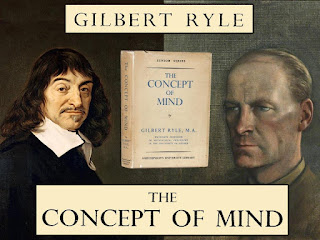
Neuroscience denies human action on the grounds that physics leaves no place for it. Theism locates the origins of human action in a mystical mental realm, making it inexplicable. Two thinkers of the last century, however, presented a superior alternative. In 1949, the first year of Harry S. Truman's only elective presidential term, three things happened that were of huge importance ... at least to me. Ludwig von Mises (1881-1973) published Human Action . Gilbert Ryle (1900-1976) published  The Concept of Mind . And, oh yeah, I was born. The connection here is that Mises's and Ryle's books are two of the most influential things I have ever read. What's also interesting is what else the books have in common. Human Action sets out the logical structure of all purposeful action as well as its socioeconomic implications. Mises called the study of human action praxeology . Thus while  Human Action is one of the most important books on economics ever written, but it is so...

Religions and Cults

A religion is simply a cult that's accumulated enough years under its belt to be thought respectable. But if you dare to venture back to the origins, you'll see the markings of a cult every time. For example, here's Deuteronomy, chapter 7 , from the Jewish Publication Society's translation of the Tanakh, or Hebrew Bible , which contains the Five Books of Moses and 19 other books (Judges, the various prophets, Kings, etc). Pay special attention to the God-authorized genocide of the inhabitants of Canaan, the animosity toward religious freedom of non-Israelites, the separatism, and the issue of chosenness. ( HaShem is Hebrew for Lord . G-d is how Orthodox Jews spell God ; in that way, should a document be destroyed, the word God would not be destroyed.) 1 When HaShem thy G-d shall bring thee into the land whither thou goest to possess it, and shall cast out many nations before thee, the Hittite, and the Girgashite, and the Amorite, and the Canaanite, and the Perizzite,...

On Doubt

We must ask if this "principle of universal doubt" is itself certain, or is it open to doubt as well? If it is known with certainty, at least one thing is beyond doubt, which makes the principle false. If, however, the principle is open to doubt --  i.e. , if it is not certain -- then on what grounds can the skeptic claim greater plausibility for his theory than any other other? --George H. Smith,  Atheism: The Case Against God , 1974

On Souls, Brains, and Persons

Neither brains nor souls reflect, intend, deliberate, analyze, think, rank, choose, and act. Persons do. Brains are not atheists. Persons are. Souls are not theists. Persons are. If your worldview keeps you from distinguishing persons from brains and souls, you ought to think about revising your worldview. If your model clashes with undeniable facts -- facts you cannot deny without self-contradiction -- you might want to take a new look at your model. "A myth is, of course, not a fairy story," Gilbert Ryle wrote in The Concept of Mind . "It is the presentation of facts belonging to one category in the idioms appropriate to another. To explode a myth is accordingly not to deny the facts but to re-allocate them." When atheists deny plain facts instead of providing naturalist explanations for those facts, they discredit the cause of secularism.

On Knowledge and Certainty

We must note the main source of confusion in the skeptical approach: the equation of knowledge and certainty with infallibility . When the skeptic claims that every knowledge claim should be doubted because man is capable of making mistakes, he is simply pointing out the obvious: that man is a fallible being. No one, not even the most resolute antiskeptic, will deny the point that man is fallible. (We must wonder, though, how the skeptic arrived at this knowledge. Is he certain  that man is fallible?)    The skeptic fails to realize that it precisely man's fallibility that generates the need for a science of knowledge. If man were infallible -- if all knowledge were given to him without the slightest possibility of error -- then the need for epistemological guidelines with which to verify ideas, with which to sort the true from the false, would not arise....  The skeptic ... starts from the same premise -- that man is fallible -- and uses it to argue that man can nev...

Purposiveness Without a Soul

When a person does something voluntarily, in the sense that he does it on purpose or is trying to to do it, his action certainly reflects some quality or qualities of mind, since (it is more than a verbal point to say) he is in some degree and in one fashion or another minding what he is doing. It follows also that, if linguistically equipped, he can then tell, without research or conjecture, what he has been trying to accomplish. But ... these implications of voluntariness do not carry with them the double-life corollaries often assumed. To frown intentionally is not to do one thing on one's forehead and another thing in a second metaphorical place; nor is it to do one thing with one's brow-muscles and another thing with some non-bodily organ. In particular, it is not to bring about a frown on one's forehead by first bringing about a frown-causing exertion of some occult non-muscle. 'He frowned intentionally' does not report the occurrence of two episodes. It repor...