Posts

Showing posts with the label human action

Mises, Ryle, and Me

Image
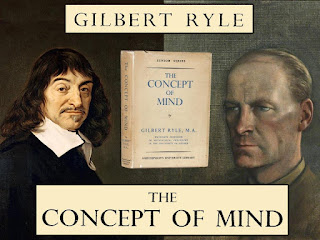
Neuroscience denies human action on the grounds that physics leaves no place for it. Theism locates the origins of human action in a mystical mental realm, making it inexplicable. Two thinkers of the last century, however, presented a superior alternative. In 1949, the first year of Harry S. Truman's only elective presidential term, three things happened that were of huge importance ... at least to me. Ludwig von Mises (1881-1973) published Human Action . Gilbert Ryle (1900-1976) published  The Concept of Mind . And, oh yeah, I was born. The connection here is that Mises's and Ryle's books are two of the most influential things I have ever read. What's also interesting is what else the books have in common. Human Action sets out the logical structure of all purposeful action as well as its socioeconomic implications. Mises called the study of human action praxeology . Thus while  Human Action is one of the most important books on economics ever written, but it is so...

On Souls, Brains, and Persons

Neither brains nor souls reflect, intend, deliberate, analyze, think, rank, choose, and act. Persons do. Brains are not atheists. Persons are. Souls are not theists. Persons are. If your worldview keeps you from distinguishing persons from brains and souls, you ought to think about revising your worldview. If your model clashes with undeniable facts -- facts you cannot deny without self-contradiction -- you might want to take a new look at your model. "A myth is, of course, not a fairy story," Gilbert Ryle wrote in The Concept of Mind . "It is the presentation of facts belonging to one category in the idioms appropriate to another. To explode a myth is accordingly not to deny the facts but to re-allocate them." When atheists deny plain facts instead of providing naturalist explanations for those facts, they discredit the cause of secularism.

On Human Action and the Laws of Physics

My summary of Gilbert Ryle ( The Concept of Mind , chapter 3, The Will ):  Denying freedom on the grounds of causality is like denying that the chessboard is an arena for surprise, innovation, purposiveness, aimlessness, attentiveness, inattentiveness, alertness, dullness, mindfulness, unmindfulness, determination, fecklessness, creativity, brilliance, foolishness, and stupidity because it is strictly "governed" by internal rules as well as the laws of physics. Those rules and laws "govern" the game but do not "ordain" the moves. If this is true of the chessboard, one can readily see that it is also true of the proverbial billiard table. Ryle's project was not to establish that the features I've listed exist; everyone knows them when they see them. He did not, he said, "intend to increase what we know about minds, but to rectify the logical geography of the knowledge which we already possess." In other words, the source of those things i...