Posts

Showing posts with the label Ludwig von Mises

Logical Atheism: Neither Materialism nor Spiritualism

I’ve been an atheist for over 50 years. It took one lecture to convince me. I don’t just disbelieve in the existence of the supernatural. I believe in the  non existence of the supernatural. The natural universe is it. How do I know? (That’s always the appropriate question but with the caveat below). The wrong answer to that question is that we have no or too little evidence. (The “new atheists” seem to like that answer.) But that gives theism credit it does not deserve. Before you ask for evidence, you need to know what an assertion means. Otherwise, you cannot know if something qualifies as evidence or not. If I say, “Crooly blurps,” the right question is not “How do you know?” but “What are you talking about?” I submit that the same applies to the assertion “God exists.” God is always defined incoherently (it can’t be all-knowing and all-powerful, etc.), and since God is said to be literally out of this world, I don’t know what the word  exists  means in the supposed s...
Reason Has Limits, But What Doesn't?

It is not a criticism of reason to acknowledge that no reasoning person or group can have a synoptic view of the world or of society that would enable him or it to rationally plan everything. The faculty of reason is packaged within individual human beings, and no mountaintop exists from which one could see and know all that it would take to plan a society or an economy in the interest of all its participants. The result of attempting to do so would inevitably be what Ludwig von Mises called "planned chaos." This is what F. A. Hayek, Mises's student, also worked so hard to explain. But when individuals operate and cooperate in a free society and marketplace, their small portion of knowledge, articulated and tacit, becomes accessible to all, mostly through the price system. Mises and Hayek showed this in the great socialist-calculation debate of the '20s and '30s. Reason is powerfully efficacious in that it enables us to perceive and understand the world that exist...

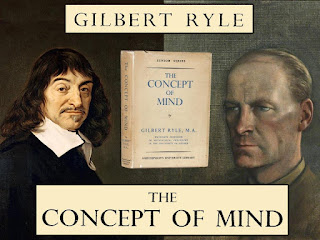
Mises, Ryle, and Me

Image
Neuroscience denies human action on the grounds that physics leaves no place for it. Theism locates the origins of human action in a mystical mental realm, making it inexplicable. Two thinkers of the last century, however, presented a superior alternative. In 1949, the first year of Harry S. Truman's only elective presidential term, three things happened that were of huge importance ... at least to me. Ludwig von Mises (1881-1973) published Human Action . Gilbert Ryle (1900-1976) published  The Concept of Mind . And, oh yeah, I was born. The connection here is that Mises's and Ryle's books are two of the most influential things I have ever read. What's also interesting is what else the books have in common. Human Action sets out the logical structure of all purposeful action as well as its socioeconomic implications. Mises called the study of human action praxeology . Thus while  Human Action is one of the most important books on economics ever written, but it is so...

Existence Exists, Ergo God Doesn't

"[A] concept of deity that implies an acting God, that is, a God behaving in the way man behaves in acting, is self-contradictory. Man acts because he is dissatisfied with the state of affairs as it prevails in the absence of his intervention. Man acts because he lacks the power to render conditions fully satisfactory and must resort to appropriate means in order to render them less unsatisfactory. But for an almighty supreme being there cannot be any dissatisfaction with the prevailing state of affairs. The Almighty does not act, because there is no state of affairs that he cannot render fully satisfactory without any action, i.e., without resorting to any means. For Him there is no such thing as a distinction between ends and means. It is anthropomorphism to ascribe action to God." --Ludwig von Mises, The Ultimate Foundation of Economic Science   (1962) QED