Posts

Showing posts with the label faith

Wilde, Skepticism, and Faith

"Skepticism is the beginning of faith." --Oscar Wilde, The Picture of Dorian Gray .

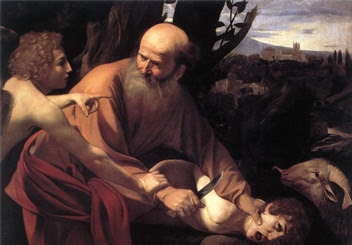
Abraham Prepares to Follow Yahweh's Command to Kill His Own Son

Image
 

Skepticism and Faith

The opposite of skepticism isn't faith or trust. It's confidence. In what? In reason, in one's cognitive faculty, and one's ability to evaluate evidence and arguments to some extent and to learn which experts can be trusted in specialized fields. Skepticism and faith (or dogmatism) are not opposed. It's the radical skeptic, demoralized by his self-confessed ignorance, who might embrace mysticism in search of a ray of hope. Without reason, he's left himself no alternative.

The Spiritual Quest Against Religion

Image
In this lecture, historian and divinity professor Alec Ryrie shows that in Elizabethan England it was commonly thought, both by theologians and everyday people, that faith and doubt, rather than being opposed, were in fact two sides of the same coin. He quotes William Perkins, whom he calls Elizabethan England's "greatest theology," saying, "True faith, being imperfect, is always accompanied by doubting." Ryrie noted that a common maxim was that if one did not have doubts about the existence of God, then one did not really have faith.

Faith versus Faith

By faith , some people do not mean belief without evidence . See more about this matter here  and here . But some do. Here's Thomas Browne in is 1642 book, Religio medici : This I think is no vulgar part of faith, to believe a thing not only above, but contrary to reason, and against the arguments of our proper senses.

Must We Renounce Our Faculties?

Great God of Nature! Must we then renounce the justifiable exercise of all our faculties, in order to be happy? To attain felicity, is it necessary that we believe in contradictions? Must we deem cruelty one of the attributes of divinity? Must the benevolent mind be called to the view of murder, in order to be fitted for the performance of its essential duties? Must injustice and revenge be interwoven with the morality of man? Shall we never be permitted to love truth, admire nature, and practice a pure and genuine morality? Oh, superstition! how much thou hast to answer for! thine influence has corrupted the faculties of man, debased his heart, and rendered wretched the whole human race. Thou hast spread ruin, misery, and devastation over a beautiful and productive earth, and thou art deserving of the curses of every intelligent being in every part of the universe.  --Elihu Palmer (1764-1806), Principles of Nature; or, A Development of the Moral Causes of Happiness and Misery Amon...

Entitled to Praise?

Does man become entitled to praise for the acknowledgment of facts guaranteed by his senses, or essentially supported through the channel of his mental faculties?... When, therefore, the Christian religion represents faith as being meritorious, it loses sight of the natural operations of the human mind; it betrays an ignorance of nature, and becomes censurable by its deviation from the primary and essential arrangements. Yet in this holy book we are told, that "he that believeth not shall be damned." But what are we to believe? Are we to believe that the Creator of the universe is the parent and friend of the whole human race? Are we to believe that his wisdom acts in coincidence with general felicity, or operates on the ground of universal happiness?... No! We are not permitted to believe this. What then is Christian belief? What are the dogmas and principles to which we are required to give an unqualified credence? However painful it may be to declare it, they are of the fo...

Again, Why Is Faith a Virtue?

Faith is an assent of the mind to the truth of a proposition supported by evidence. If the evidence adduced is sufficient to convince the mind, credence is the necessary result; if the evidence be insufficient, belief becomes impossible. In religion, therefore, or in any other of the concerns of life, if the mind discerns that quantum of evidence necessary to establish the truth of any proposition, it will yield to the force and effect of the proofs which are produced; if, on the other hand, the intelligence of man does not discern the necessary influence of such evidence, infidelity will be the natural and unavoidable result. Why then is the principle of faith considered a virtue? If a man beholds the sun in its meridian splendour, and declares the truth of this exhibition, is he meritorious in making this acknowledgment? If any truth in nature is well substantiated and supported by the testimony of his mind or senses, does he deserve credit for his mental acquiescence? No. --Elihu Pa...

Why Is Faith a Virtue?

In religion, therefore, or in any other of the concerns of life, if the mind discerns that quantum of evidence necessary to establish the truth of any proposition, it will yield to the force and effect of the proofs which are produced; if, on the other hand, the intelligence of man does not discern the necessary influence of such evidence, infidelity will be the natural and unavoidable result. Why then is the principle of faith considered a virtue? If a man beholds the sun in its meridian splendour, and declares the truth of this exhibition, is he meritorious in making this acknowledgment? If any truth in nature is well substantiated and supported by the testimony of his mind or senses, does he deserve credit for his mental acquiescence? No. Why then have the Christian world annexed to this principle of belief any degree of merit? Is necessary acquiescence a virtue? Does man become entitled to praise for the acknowledgment of facts guaranteed by his senses, or essentially supported th...

Is Reason Superior?

"If, now, we could find something which you could unhesitatingly recognize not only as existing but also as superior to our reason," St. Augustine asked in Free Choice of the Will , "would you have any hesitation in calling it, whatever it may be, God?" See anything wrong with this? Note the word recognize . The word has more than one sense, and I'm certain Augustine didn't mean the sense of seeing a familiar face or hearing a familiar tune. He must mean the sense of understanding. So my question is: how could we understand that something is superior to our reason? Reason is our means of understanding; it is understanding. If something were superior to reason, reason could not demonstrate it or lead to such understanding. It wouldn't require demonstration or understanding. As someone (Richard Dawkins, I think) put it, if you make an argument that faith is superior to reason, you've already lost the debate. But wait--we might interpret this another w...

Who's the Real Skeptic?

As I note here , when George H. Smith, in Atheism: The Case Against God , constructed a dialogue between a skeptic and an antiskeptic, the theist was the skeptic. That may be counterintuitive, but it shouldn't be. Smith explains that many theists, including career theologians, are happy to present what look like reason-based arguments for God for as long as they can. But as soon as they run into the wall of logic, as inevitably they must, they will abandon -- nay, turn against -- reason and become open skeptics. (The best ones, after pushing reason as far as they can, then proclaim the limit of reason without actually rejecting it. Aquinas and Maimonides come to mind.) I think it was philosopher Antony Flew who said that theists treat debates with atheists like a tennis game in which the net is dropped when it's their turn to hit the ball. Just so. When beaten by reason, those theists will demand that atheists prove that it is efficacious. They will even have the audacity to as...

"Follow Reason as a Guide"

"More and more the myths put about by these Christians are better known than the doctrines of the philosophers. Who has not heard the fable of Jesus' birth from a virgin or the stories of his crucifixion and resurrection? ...But the point is this, and the Christians would do well to heed it: One ought first to follow reason as a guide before accepting any belief, since anyone who believes without testing a doctrine is certain to be deceived.... Just as the charlatans of the cults take advantage of a simpleton's lack of education to lead him around by the nose, so too with the Christian teachers: they do not want to give or receive reasons for what they believe. Their favorite expressions are 'Do not ask questions, just believe!' and: 'Your faith will save you!' 'The wisdom of the world,' they say, 'is evil; to be simple is to be good.' If only they would undertake to answer my question--which I do not ask as one who is trying to understand t...

What Exactly Is Faith?

From Auburn University philosophy professor Roderick T. Long's post "Defensor Fidei" : Secularists often criticise the notion of “faith,” which they take to mean belief without evidence, or at least belief without sufficient evidence. I think this is a mistake. I do not mean to deny that many doctrines put forward as articles of faith are in fact propounded without sufficient evidence. All that I deny is that their being so is part of the meaning of the word “faith,” either in ordinary language or in theology. Note that I am not saying that being based on evidence is part of the meaning of “faith,” but only that not being based on evidence is not part of the meaning of “faith.” Faith can either be well-grounded in evidence, or not. It is not the purpose of this post to affirm (or for that matter to deny) that any particular article of faith is true, or reasonable, or justified by evidence. I’m in formal rather than material mode here....   It seems to me that what the wor...

Knowing and Believing

When I say I know X, I mean -- and I think most people would agree -- that I have a fair degree of confidence that X is the case and that this conviction is justified.* (It's always fair to ask why someone is confident.) But what does it mean to say, "I believe (in) X"? That seems to be a mushier claim. I'd like to try to sort this out. Let's start by acknowledging that many words have multiple senses. There is no platonic realm where we can look for the true  definition of words. Language is a living social institution, and words "move" over time. (I recommend linguist John McWhorter's enjoyable book Words on the Move: Why English Won't - and Can't - Sit Still [Like, Literally] .) From the time of Samuel Johnson, dictionaries were descriptive, not prescriptive. They showed how words were commonly used, but not how they ought to be used. (Of course, if you want to communicate with other people, you'll want to infer prescription fr...

No Evidence, or No Good Evidence?

Evidentialist atheists often conflate the concepts evidence and good evidence. But I see a world of difference between saying, "You offer no evidence for your belief" and "You offer no good evidence for your belief."It's an important distinction. First off, is it really true that theists offer no evidence whatever? In "Defensor Fidei," Roderick T. Long, an Aristotle and Wittgenstein scholar at Auburn University, says this not usually the case. Theists and atheists clearly use the word faith in different senses, which impedes the conversation. Long writes: It seems to me that what the word [ faith ] means in ordinary language is not belief that goes beyond the evidence, but rather belief that goes beyond one’s personal experience. To someone of skeptical tendencies these might of course come to the same thing, but for most of us they do not. My belief that Stonehenge exists is not based on personal experience (nor on demonstrative deduction therefrom),...