Posts

No Comment

A Catholic priest had to resign after it was learned that over his 20-years as a priest, he had baptized thousands of people in Arizona and California incorrectly . It seems he said, "We baptize," instead of, "I baptize" (speaking on behalf of Jesus). Apparently God (or one of the Trinity) is very picky about this. A church authority said "we" is wrong because it's not the community that baptizes. But couldn't the church just let it slide and explain that the priest was merely using the royal "we" on behalf of Jesus? Thankfully, in 2007 the Vatican abolished limbo, that place between heaven and hell for unbaptized babies. So the children who were incorrectly baptized, if they don't get a real baptism, might still get into heaven. Thank God.
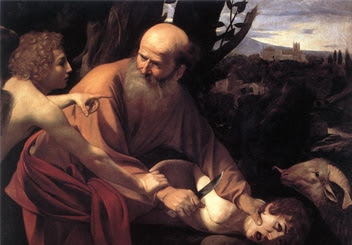
Abraham Prepares to Follow Yahweh's Command to Kill His Own Son

Image
 

Skepticism and Faith

The opposite of skepticism isn't faith or trust. It's confidence. In what? In reason, in one's cognitive faculty, and one's ability to evaluate evidence and arguments to some extent and to learn which experts can be trusted in specialized fields. Skepticism and faith (or dogmatism) are not opposed. It's the radical skeptic, demoralized by his self-confessed ignorance, who might embrace mysticism in search of a ray of hope. Without reason, he's left himself no alternative.

Descartes Got it Wrong

Est, ergo sum, ergo sum conscius et potest cogitare. (It is, therefore I am, therefore I am conscious and can think.)

Ask a Theist

Can a deity with a bloodlust unparalleled in all of history really be a benevolent God?

Ask a Theist

Was it okay for God to kill two people, Aaron's sons, merely because they made the ritual fire incorrectly? (Leviticus 10:1)

Where Does Epistemology Begin?

What could a world without entities-with-identities possibly be? No one can say because no one can think about what it would be. Indeed, the word be would lose all sense. That says a great deal about the starting point for metaphysics and epistemology. (Thank you, Aristotle, Spinoza, Rand, Wittgenstein, Roderick Long, and others.)