Posts

"Inspired, and Therefore True"

Robert G. Ingersoll's "Some Mistakes in Moses" goes on: In the time of Moses, it was perfectly safe for him to write an account of the creation of the world. He had simply to put in form the crude notions of the people. At that time, no other Jew could have written a better account. Upon that subject he felt at liberty to give his imagination full play. There was no one who could authoritatively contradict anything he might say. It was substantially the same story that had been imprinted in curious characters upon the clay records of Babylon, the gigantic monuments of Egypt, and the gloomy temples of India. In those days there was an almost infinite difference between the educated and ignorant. The people were controlled almost entirely by signs and wonders. By the lever of fear, priests moved the world. The sacred records were made and kept, and altered by them. The people could not read, and looked upon one who could, as almost a god. In our day it is hard to conceive ...
"Utterly Impossible"

Yet more from Robert G. Ingesoll's "Some Mistakes of Moses" : If God created the universe, there was a time when he commenced to create. Back of that commencement there must have been an eternity. In that eternity what was this God doing? He certainly did not think. There was nothing to think about. He did not remember. Nothing had ever happened. What did he do? Can you imagine anything more absurd than an infinite intelligence in infinite nothing wasting an eternity?   I do not pretend to tell how all these things really are; but I do insist that a statement that cannot possibly be comprehended by any human being, and that appears utterly impossible, repugnant to every fact of experience, and contrary to everything that we really know, must be rejected by every honest man.

"Let Us Wait for the Light"

More from freethinker Robert G. Ingersoll's "Some Mistakes of Moses" : Let us account for all we see by the facts we know. If there are things for which we cannot account, let us wait for light. To account for anything by supernatural agencies is, in fact to say that we do not know. Theology is not what we know about God, but what we do not know about Nature. In order to increase our respect for the Bible, it became necessary for the priests to exalt and extol that book, and at the same time to decry and belittle the reasoning powers of man. The whole power of the pulpit has been used for hundreds of years to destroy the confidence of man in himself—to induce him to distrust his own powers of thought, to believe that he was wholly unable to decide any question for himself, and that all human virtue consists in faith and obedience. The church has said, "Believe, and obey! If you reason, you will become an unbeliever, and unbelievers will be lost. If you disobey, you w...

"Allow Each Man to Have His Thought and Say"

From 19th-century freethought orator Robert Ingersoll's "Some Mistakes of Moses" : I want to do what little I can to make my country truly free, to broaden the intellectual horizon of our people, to destroy the prejudices born of ignorance and fear, to do away with the blind worship of the ignoble past, with the idea that all the great and good are dead, that the living are totally depraved, that all pleasures are sins, that sighs and groans are alone pleasing to God, that thought is dangerous, that intellectual courage is a crime, that cowardice is a virtue, that a certain belief is necessary to secure salvation, that to carry a cross in this world will give us a palm in the next, and that we must allow some priest to be the pilot of our souls.   Until every soul is freely permitted to investigate every book, and creed, and dogma for itself, the world cannot be free. Mankind will be enslaved until there is mental grandeur enough to allow each man to have his thought and ...

Robert G. Ingersoll, American Freethinker

Robert G. Ingersoll (1833-99), known "The Great Agnostic," was a remarkable polymath and popular orator at time when, as Wikipedia puts it, "oratory was public entertainment": He spoke on every subject, from Shakespeare to Reconstruction, but his most popular subjects were agnosticism and the sanctity and refuge of the family. He committed his speeches to memory although they were sometimes more than three hours long.   Many of Ingersoll's speeches advocated freethought and humanism, and often ridiculed religious belief. For this the press often attacked him, but neither his opinions nor the negative press could stop his increasing popularity. During Ingersoll's greatest fame, audiences would pay $1 or more to hear him speak, a considerable sum for that time. Many of his speeches were collected and published in book form. In his 1879 preface to the publication of  "Some Mistakes of Moses,"  Ingersoll said: For many years I have regarded the Pentat...

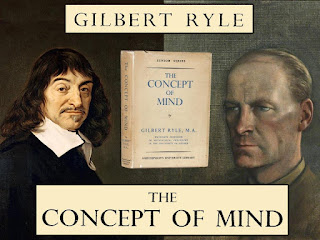
Mises, Ryle, and Me

Image
Neuroscience denies human action on the grounds that physics leaves no place for it. Theism locates the origins of human action in a mystical mental realm, making it inexplicable. Two thinkers of the last century, however, presented a superior alternative. In 1949, the first year of Harry S. Truman's only elective presidential term, three things happened that were of huge importance ... at least to me. Ludwig von Mises (1881-1973) published Human Action . Gilbert Ryle (1900-1976) published  The Concept of Mind . And, oh yeah, I was born. The connection here is that Mises's and Ryle's books are two of the most influential things I have ever read. What's also interesting is what else the books have in common. Human Action sets out the logical structure of all purposeful action as well as its socioeconomic implications. Mises called the study of human action praxeology . Thus while  Human Action is one of the most important books on economics ever written, but it is so...

Religions and Cults

A religion is simply a cult that's accumulated enough years under its belt to be thought respectable. But if you dare to venture back to the origins, you'll see the markings of a cult every time. For example, here's Deuteronomy, chapter 7 , from the Jewish Publication Society's translation of the Tanakh, or Hebrew Bible , which contains the Five Books of Moses and 19 other books (Judges, the various prophets, Kings, etc). Pay special attention to the God-authorized genocide of the inhabitants of Canaan, the animosity toward religious freedom of non-Israelites, the separatism, and the issue of chosenness. ( HaShem is Hebrew for Lord . G-d is how Orthodox Jews spell God ; in that way, should a document be destroyed, the word God would not be destroyed.) 1 When HaShem thy G-d shall bring thee into the land whither thou goest to possess it, and shall cast out many nations before thee, the Hittite, and the Girgashite, and the Amorite, and the Canaanite, and the Perizzite,...